
Failures Of Imagination

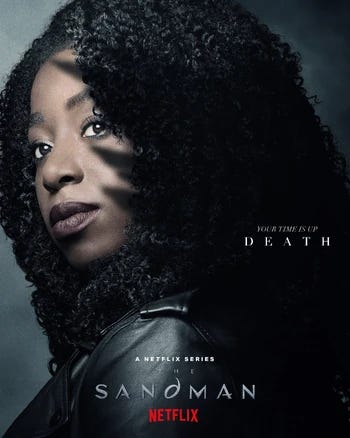
How parochial can you be? If your mind cannot encompass the notion that an actor with a different colour skin can be playing a character that was white in the book, comic, or previous version of the film, then how is it truly capable of understanding the breadth of a piece of work and the subtle interplays that must exist between any artwork and the environment it is having a conversation with?
The mind that takes a piece of fiction literally when it serves their own echo chamber, but which rounds on those who see a metaphor for themselves that disagrees with that reading do not point up a limit in a story, but one in themselves.
It is true that one cannot truly recontextualise something’s time-locked nature and the social temporal location of it’s author in the now and expect it to meet the same socio-psychological standards as we currently use to measure a work’s worth. But a writer who writes with an intention to capture the imagination of not only their contemporaries but the mind’s of those who dwell in the future, is also crafting a work that they wish to be in constant dialogue with whatever contemporary setting it finds itself in.
When the personal becomes universal and remains so, over a long period of time, that conversation changes … and you want it to. If Sherlock is not a canvas onto which the imagination of every person who reads it can be projected, it is in some sense a failure.
It is of course possible that someone has an ideal audience, and that they do not wish to write to a diverse audience. If a diverse audience picks up said work, which is in the wild, and they choose to accept the work but not the author, what exactly is the author going to do about it? It is out in the wild.
Sometimes a work beds itself down into the consciousness so deeply that if the author disappoints or majorly alienates themselves from the readership, the readership will take the work and control of it away, to some degree, from the author. This is one of the wonders and dangers of creating works that have the potential to become larger than the person who wrote them.
All the changes in Sandman were pulled off note-perfect — if you were focussed on anything other than the story then you missed the point, and are not really qualified to call yourself a fan.
There are other examples where genderflips or actors from different races have acted brilliantly — I am not going to ennumerate them all. The controversy attached has forefronted most of these examples. One day we will just be able to appreciate an actor for the acting that they do, and we will stop complaining about this kind of thing. Representation is important and I really believe that you cannot be what you cannot see. It behooves us as both artist and audience to allow our fictions to be as diverse as our stories. We must not let our imaginations fail.